Not wasting a single moment has seen one man spend more than 20 years in education. THEO PANAYIDES meets a man intent on bringing excitement to adult learning
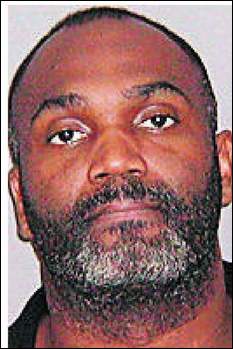
It takes me a while, sitting in his office at the European Institute of Management and Finance (EIMF) in Nicosia, to figure out who Marios Siathas reminds me of, then it hits me: he looks a bit like the actor Mark Ruffalo, Oscar-nominated this year for Spotlight. His eyes are brown, his hair graying at the temples; his smile is quick and easy (though he smiles with his mouth more than his eyes), revealing very white teeth. He’s 43, a few years younger than Mr Ruffalo – though oddly enough, just like the Hollywood actor, he went through a sudden and very serious health problem in his mid-30s. Ruffalo suffered a brain tumour that required surgery, and left him deaf in one ear; Marios suffered a brain aneurysm – literally from one day to the next – and almost died.
We’ll get to that later – but first, what does he do? This is where his life tends to diverge from Mark Ruffalo’s, adult education being quite a bit less glamorous than Hollywood red carpets and Oscar nominations. It’s one of life’s great mysteries that frivolous subjects get people very excited, whereas the really important issues – like the healthy functioning of a corporate economy – tend to leave them indifferent. Mention “the financial and professional services sector” to the person in the street and watch their eyes glaze over – yet, as Marios points out, that sector (with a slight assist from tourism) is the main reason why recession-hit Cyprus hasn’t turned into a basket case like some other nearby countries we could mention. It’s the only sector where employment has grown since the crisis, and also a sector that’s managed (by and large) to prevent clients from deserting us after politicians landed them with the infamous haircut, earning back the trust of the lucrative foreigners with assurances and personal relationships. “I mean, it’s a big thing having people from abroad trusting not the system, but the actual providers.”

Livening up adult education
Helping to train those providers has been his vocation for nearly two decades, first in a 14-year stint at the Cyprus International Institute of Management (CIIM) then, for the past year, as General Manager of the EIMF. The certificates on the waiting-room walls at the Institute’s premises – located above a Burger King, as if to flaunt its attachment to successful business models – speak of AAT-approved courses like ‘Accounting and Ethics’, just as the books on the bookshelves have titles like Game-Changing Strategies and Changing the Sales Conversation, and Marios’ own conversation is littered with acronyms like the IOC (Investment Operations Certificate) and ICAEW (Institute of Chartered Accountants in England and Wales) and how long it takes to become certified under ACAMS. That’s the Association of Certified Anti-Money Laundering Specialists, if you must know, and the answer is about six months.
Is it a business school or a management school? “Let’s say it’s an executive education centre.” There are Central Bank compliance courses, short-term training programmes on subjects like fund administration and management skills, and so on. “Last year,” he estimates, “we trained around 1,000 people”, whether youngsters doing professional studies or experienced people with jobs in the sector.
All well and good – but what makes Marios interesting is that he’s not too hung up on education in the strict sense of getting a degree that’ll lead to a ‘good job’. For him it’s more about self-fulfilment, an arrow in the quiver of personal development: he thinks education for kids should be experience-based as much as possible (don’t just talk to them about lions, take them to the zoo), and adult education consists as much of classroom interaction as learning specific facts. His own staff are urged to be interactive, not just in love with the sound of their own voice. “PowerPoint is like a killer in education, for me,” he says, growing animated. “It kills everything else, because you just show nice slides and talk, talk, talk, OK I covered my stuff, go home. I mean, how is that interesting to anyone?”
The idea isn’t just – as so often in Cyprus – to go and study for the sake of studying, especially if studying is all you end up doing. Sticking to a pre-ordained script doesn’t serve anyone. “I interviewed 50 people in the last month,” he muses, “because I’m looking for staff now. They all have super degrees – and they’re all wasted, because [the graduates] come back immediately. They don’t bring anything new to it. It’s like OK, fine, you did nice studies, you were on a nice campus, you met nice people – but you’re not bringing something!” He himself has a Bachelor’s in Marketing and Management from Western Kentucky University (he also did an MBA some years later, at the University of Guelph in Ontario) – but his CV also shows, quite surprisingly, that he managed a Steak n Shake in Kentucky, a fast-food franchise restaurant that was open 24 hours, while he was studying. It’s one thing working as a waiter or dishwasher for some extra cash – but managing a restaurant, getting employees to respect your 21-year-old self, handling the various daily crises that inevitably arise, all while doing a degree? That’s quite impressive.
Admittedly he had some experience, having virtually grown up in his father’s restaurant (the now-defunct Gardenias) in Larnaca. There were four siblings, three boys and a girl (another brother was born when Marios was 18), and they all worked in the business – though the way he recalls his childhood says a lot about the kind of person he is. “I remember from five, six, seven years old talking to all kinds of people at the restaurant. Tourists, Cypriots, anyone. I was the kid that was always there”. His dad had to physically force him out every evening, he admits with a chuckle. Later, in his teens, he spun records as a DJ at a tourist disco and worked at the Flamingo Hotel in winter, when the restaurant wasn’t so busy. “I was kind of intrigued by meeting all these different people… At age 15, I probably had more friends outside Cyprus” – pen-pals with whom he corresponded in those pre-internet days – “than in Cyprus”.
Even now, that’s the way he comes across: as a people person, a positive person, a doer. Inadvertently, his style reveals a basic truth about the financial services sector where he now plies his trade – that it’s really not too different from the hospitality sector where he started out (he worked in restaurants until his MBA, when he did a project on cross-training employees and became interested in education). Any good accountant or corporate lawyer has to know the rules inside out, of course – but they also need to be personable, positive, pleasant with clients: in a word, trustworthy. Trust comes from friendship, even if it’s just a business friendship. One of his passions is travel, says Marios – but he doesn’t tell me of adventure holidays and white-water rafting, though he’s done his share of all that (he visited 40 of the 50 states while living in America); instead he cites the pleasure of meeting old friends, when he happens to find himself in Greece or Russia or Dubai. “I think I have a friend everywhere I go.”
His style, in other words, is gregarious, extrovert. He’s a motivator, which is hard work. People are easy enough to excite, but excitement fades: “To keep that motivation going, you have to be in the right environment. Work environment, family environment”. Head-space is important, being psychologically in the right place for ideas to take root. He tells me a story from his own life: he always used to listen to the news while driving to work in the morning – but the litany of other people’s problems brought him down, leaving him crushed by the time he arrived at the office. Now he listens to music instead.
Like his students, Marios has to push himself. Adult education sounds dull – I’m sorry, it just does – but there’s actually something quite valiant in going back to school when you don’t have to. Our lives, after all, are so busy; it’s surely easier to settle, or go with the flow. His own life is almost completely taken up with work and family, from 6am when he wakes up to 8.30pm when his seven-year-old son goes to bed – but he still tries for more, both professionally and personally. Life shouldn’t just be “task-based,” he asserts fervently – life should be about “looking at more than just what I need to do today. What can I do tomorrow? What can I learn? Can I do something else? I mean, you ask people ‘Can you tell me something else you want to do?’,” he notes, shaking his head, “and they’re like ‘I don’t know, I think what I’m doing is fine’. ‘What excites you?’ and they’re like ‘I don’t know, it pays the bills’. Well OK, if that excites you…”
He himself is restless, always has been. He was restless as a kid, chatting to all and sundry and longing to get out of Cyprus. He’s restless now, sticking his neck out with a personal project like the EIMF (admittedly, it’s a partnership) after feeling like he’d peaked at CIIM. “If you don’t stick your neck out when you’re 43, when are you going to do it?” he asks rhetorically – but money wasn’t the driver, he adds, it never has been. It’s his restless energy, exactly what you’d expect in a man who enjoys travelling and skydiving and snowboarding, and freediving in the sea and trekking in the mountains.
Just above his forehead is a long thin scar to remind him of that restlessness – an old childhood scar, incurred after bouncing around on his bed a bit too energetically. Further up, partially hidden by his hair, is another scar, this one L-shaped and much larger: it’s the result of that evening, around eight years ago, when he was out playing football with friends and suddenly felt ‘the worst headache of your life’, as they say in the literature. His shoulders went numb, he was nauseous, his head felt like it was about to explode. “I owe a lot to the night doctor in the ER,” he says now – because doctors often fail to spot a brain aneurysm, sending patients home with headache medication where the blood clot in their head promptly ruptures and they die instantly. This particular doctor was persistent, doing tests (including a CAT scan and an MRI) until the problem was revealed – but Marios’ ordeal still wasn’t over, because the operation isn’t always successful and often leaves neurological after-effects, ranging from blindness to paralysis, even when it is.
He was lucky, getting off with only the L-shaped scar to remind him of his near-death experience. Did it change his outlook? Not really, he shrugs anti-climactically. “I’m not going to say ‘I saw the light’ or anything”. After all, he’d always been the kind of person who didn’t want to waste a single minute of his life; having its fragility confirmed merely made him more so. I do wonder, however – though he denies it – if becoming a father so soon afterwards didn’t carry a subconscious tinge of ‘Time’s running out’.
Then again, he’s always been relaxed about such things. Marios Siathas has spent 20 years in education, yet his own education almost didn’t happen. The family weren’t rich, his dad – though supportive in theory – urged him to stay with the restaurant, none of his siblings (except the youngest brother, years later) ever went to university – yet he never got frustrated, or doubted that he’d go and study eventually. “I wanted to do it, I had my mind set on it and that’s it,” he recalls quite simply. “It was going to happen.”
Has he changed since then? Not really, he replies serenely; the “basic ingredients” are still there – that mix of extroversion, confidence, personal development and restlessness. “If I’m assigned a task,” he explains, trying to describe his personality, “if you put me in a room and say ‘Do this job’… I will usually look at it and say ‘OK, this is what you do now. But can we do it differently?’”. He chuckles, as if at his own audacity: “Maybe I’m wrong, at the end of the day, but I will explore. I’ll get into this job. I will not just do the job because someone told me to. I will do the job – but I will put some of the Marios style in the job!”. ‘Marios Style’, an exciting new biopic starring Mark Ruffalo.
The post ‘What can I learn’ appeared first on Cyprus Mail.


/pic9772199.png)